When the Trump administration moved swiftly to overhaul U.S. immigration policy in early 2025, Haitian communities across Florida braced for impact. HCLC moved faster.
Within days of the administration’s first immigration actions — ending the CBP One app, accelerating deportations, and closing legal pathways — the Haitian Christian Leaders Coalition mobilized a coordinated response. Forums were organized. Immigration lawyers were recruited. Pastors were equipped. And when the moment called for a broader gathering, HCLC helped convene faith leaders from across South Florida to stand together in the face of a mounting crisis.
A Community in Fear — and a Coalition That Responded
South Florida is home to the largest concentration of Haitian immigrants in the United States. As of early 2024, approximately 852,000 Haitians lived across the country — with Florida housing more than any other state. These are not abstract statistics. They are our church members, our neighbors, our families.
The speed of policy changes in early 2025 created what HCLC Vice President Pastor Keny Felix described as “a significant amount of concern and fear.” The sudden termination of the CBP One app — which had allowed people to navigate a legal process — compounded the anxiety of tens of thousands who had been following the rules.
“From the start of the administration, the focus on deportation, the focus on limiting or closing the border, getting rid of the app that was actually allowing people to go through a legal process — that was very difficult, very challenging.”
— Pastor Keny Felix, Vice President, HCLC
HCLC President Pastor David Eugene — who leads Haitian Evangelical Church in Miami — made clear the coalition’s position from day one: “The coalition joins its voice with other established organizations to forcefully condemn the unjust treatment of our Haitian brothers and sisters in the USA.”
Know Your Rights: Legal Support for the Haitian Community
One of HCLC’s first responses was practical: connecting pastors and church members directly with immigration attorneys. Forums were hosted across South Florida where legal experts answered questions, clarified rights, and helped families understand what the policy changes actually meant for their specific situations.
At Bethel Evangelical Baptist Church, Pastor Felix led his congregation by openly addressing members’ fears from the pulpit and inviting legal professionals to speak after Sunday services. The message was deliberate: you are not alone, and there are people standing with you.
HCLC also connected with local elected officials, meeting with mayors and city commissioners to express the community’s concerns and build relationships with leaders who could amplify Haitian voices in policy conversations.
The Crisis in Haiti: Why Return Is Not an Option
At the core of HCLC’s advocacy is a simple, devastating truth: Haiti is not safe to return to. The U.S. State Department has maintained a Level 4: Do Not Travel advisory for Haiti since September 18, 2024, citing kidnapping, crime, civil unrest, and the collapse of essential health services. The United Nations reported that gang violence killed more than 5,600 people and displaced over one million others in Haiti in a single year.
When the U.S. government argues that Haitian nationals can safely return, HCLC — like the United Nations and the State Department’s own advisories — disagrees. Our members fled real danger. Returning them to it is not policy. It is a moral failure.
Bringing Florida Clergy Together
On February 28, 2025, HCLC co-hosted a landmark gathering at Bethel Evangelical Baptist Church — bringing together Protestant and Catholic clergy from across South Florida to address the plight of the Haitian community. The event also drew participation from Faith in Action, Faith in Florida, and the National Haitian American Elected Officials Network.
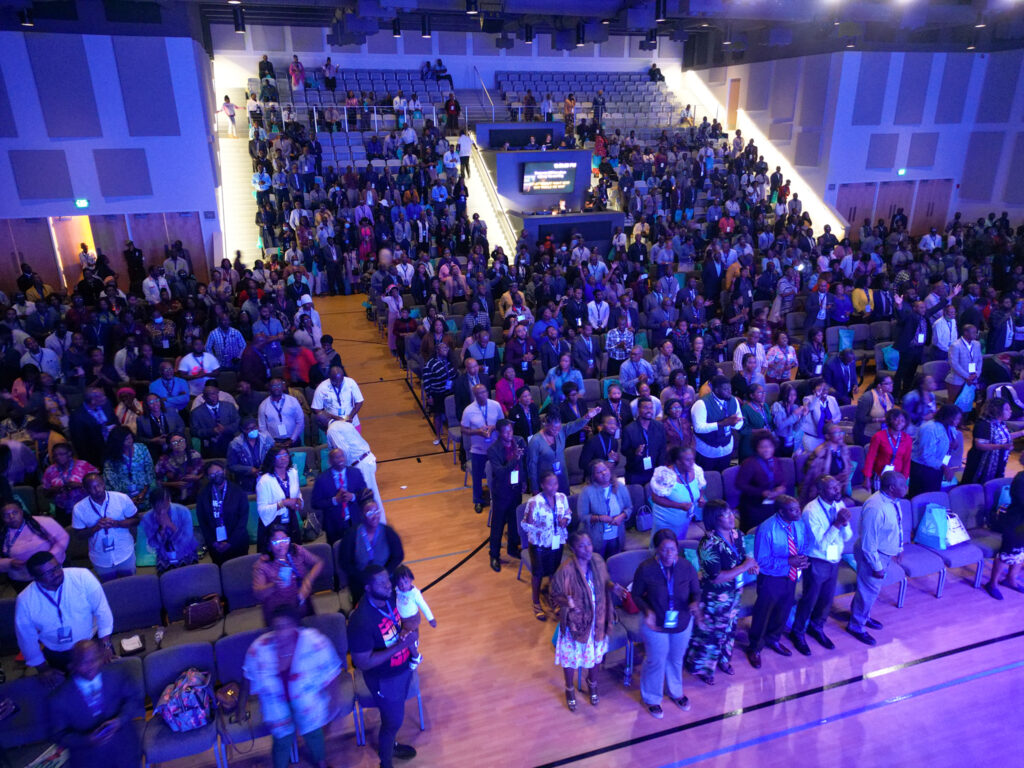
The goal was unity across denominational and organizational lines. The challenges facing Haitian immigrants do not belong to any single church or coalition — they belong to the whole body of Christ.
“We’re not talking about uprooting the herd. We’re talking about people. People that have families. People who have kids. People who have mothers, grandmothers. People who have siblings, babies.”
— Pastor Keny Felix
Advocacy on the Hill — and a Broader Call to the Church
HCLC’s advocacy moved from South Florida to Washington, D.C., as Pastor Felix participated in the D.C. Day of Prayer & Action for Vulnerable Families, hosted by Faith in Action on March 3, 2025. Meetings were sought with the offices of Florida’s congressional delegation — including Republican representatives Mario Diaz-Balart and Maria Elvira Salazar — to press for compassionate, lawful protection for the Haitian community.
The Florida Baptist Convention’s own leadership echoed the importance of this work. Executive Director Stephen Rummage acknowledged what HCLC has long known: Haitian congregations “have been a vital part of Florida Baptist Convention church life for a long, long time. They win many people to Jesus and minister to real needs in countless ways.”
“Just as we speak passionately about being a convention that supports life, that values life — as we speak to protect the unborn — I believe we have the responsibility to speak and to advocate on behalf of the immigrant, on behalf of the refugee. Regardless of their legal status. From the standpoint of treating people with compassion and embracing their inherent value as human beings created by the same God that we all serve.”
— Pastor Keny Felix
Our Commitment Going Forward
HCLC will continue to hold forums, facilitate legal seminars, meet with elected officials, and lift our voices in the public square — not as a political organization, but as a community of faith compelled by Scripture to stand with the vulnerable. We will not be silent while our brothers and sisters face injustice.
If you are a Haitian immigrant in need of guidance on your immigration rights, or if your church would like to host a legal information forum, contact us. If you want to stand with us in this work, get involved. And if you believe as we do that the Church must speak when the vulnerable are threatened, share this story.